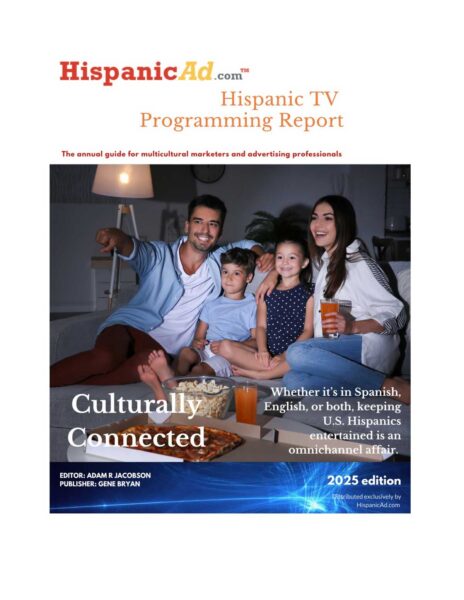
Often treated as an afterthought by marketers and agencies alike, the 15-second TV spot is usually just a cut down version of the 30-second spot, rarely copy tested, but assumed to be at least 50 percent as good as the :30 from which it’s derived.
Agency
Know the Multicultural Market and you’ll know the Key to Digital Success. [INSIGHT]
Historically, and Today, This Population Leads the General Public to Emerging Trends: – Marketers are plowing more and more resources into digital strategies, and often multicultural budgets are pilfered to pay for it. But this may be a critical mistake, because multicultural consumers are key influencers in the digital space, as well as in a brand’s relevance to popular culture. By Stephen Palacios / Added Value Cheskin
Latino Food Purchases driven by Functional and Emotional Values. [INSIGHT]
A new study called The Multi-Cultural Latino Consumer finds that though Latinos are far from homogenous, diverse segments overall stay true to significant commonalities when it comes to food, in particular their preference for fresh, local and whole ingredients and traditional dishes that help preserve their connection to their family and country of origin.
Digital set to surpass TV in Time Spent with US Media.
Average time spent with digital media per day will surpass TV viewing time for the first time this year, according to eMarketer’s latest estimate of media consumption among US adults.
Latina Power Shift. [Report]
U.S. Hispanic women, also known as Latinas, have recently and rapidly surfaced as prominent contributors to the educational, economic, and cultural wellbeing of not only their own ethnicity, but of American society and the consumer marketplace. This rise of Latinas is driven both by strong demographics and a healthy inclination to embrace and retain their Hispanic culture even as they make significant strides toward success in mainstream America.
Viva La Audienca. [REPORT]
Today’s growing US Hispanic market is a fascinating place. On the one hand, traditional values abound, on the other, we find a dynamic and tech-savvy segment of the population. This multi-faceted combination creates a mosaic that is at once both beautiful and confusing. Marketers are justifiably keen on leveraging both English and Spanish language ads to reach and connect with this rapidly growing segment of the population.
Inflection Point for Brands Using Data Driven Marketing. [REPORT]
BlueKai released its second Data Impact Report which revealed that brands are dramatically increasing their reliance on data to power their marketing efforts. According to the new study, 36% of respondents indicated that at least a fifth of their marketing budgets were “data driven” vs. only 11% cited in the company’s report in December 2012, showing a staggering 227% increase over the last 6 months.
What Data are Marketers Analyzing?
The importance of cross-channel activity keeps rising, with nearly three-quarters of companies worldwide analyzing interactions between different online channels, according to a survey by research firm Econsultancy and data consulting company Lynchpin. More companies also paid attention to social data in 2013, at 63% of respondents, up from 56% the previous year.
Hispanic Adult Millennials: Enthusiastic Mall Shoppers. [INSIGHT]
Is the shopping mall a dying institution? Last December, The Atlantic published an article, “The Death of the American Shopping Mall,” reporting that e-commerce poses a major threat to shopping centers as we know them. As people make more purchases online, this story suggests that fewer people will shop in physical locations and we won’t need as many malls. By Insight Tr3s
Case Study: Nivea Uses Humor to Get Men to Face Grooming Facts
As personal care brands expand their offerings to men beyond the basics of body wash, shampoo and shave cream, they are thinking differently about how to engage the male shopper, who can be overwhelmed by choice and underwhelmed by traditional advertising.
The Mexican American Professionals.
Years ago, the Pew Hispanic Center lacked information about Mexican Americans—they only dealt with “Hispanics.” Since that time, the Pew Hispanic Center has concluded that “a report based on a nationwide survey” found most Hispanics don’t embrace the term “Hispanic,” and even fewer prefer the term “Latino.” Instead, they prefer specific terms including Guatemaltecos, Peruanos, and Mexicans.
How Auto Marketers look to Prove ROI.
From the moment original equipment manufacturers (OEMs) began investing in web properties, marketers have used data to attempt to prove to executives that digital dollars deliver a return on investment (ROI).
Hispanic Adult Millennials’ Changing Drink Preferences
Recently in our blog, we’ve been taking a closer look at Hispanic Adult Millennials, their views on nutrition, and their eating habits. We’ve shown that making smart food choices is important to them, even though in everyday life their busy schedules and preference for convenience often lead them toward fast food and unhealthy snacks. By Insight Tr3s
The Future of Correspondence. [REPORT]
“The Future of Correspondence” assesses the role of mail in the digital age, delving into the rise of “slow communication” and the fusion of digital and physical. It examines what’s driving these developments, the ways in which they’re manifesting and what they mean for marketers. The report also spotlights eight innovative direct mail campaigns and takes a look at how email is evolving, the advent of delivery lockers and new approaches to stamps and addresses.
U.S. Hispanics more likely to purchase Groceries at C-Stores than Non-Hispanics.
On average, U.S. Hispanics make almost two more visits a month than non-Hispanics to major oil chain convenience stores, and nearly one more visit over a 30-day period to traditional c-stores than non-Hispanics, finds NPD’s convenience store research. For some Hispanics, c-stores supplement or substitute grocery stores.