We’ve Come a Long Way, Baby: The Future of Leadership Is Female—and Latina
March 17, 2026
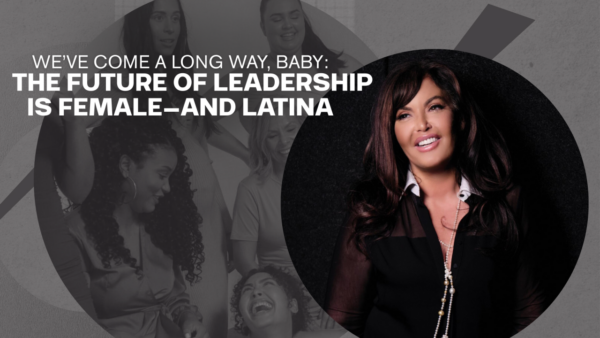 By Liz Castells-Heard, Founder, CEO and Chief Strategy Officer, INFUSION by Castells
When I was a teenager, I challenged my junior high school so girls could wear pants. I burned bras in protest for women’s rights. And when I entered corporate America, the few women in the room weren’t executives—they were secretaries. A pinch in the ass, harassment and unnecessary setbacks were considered “the norm.”
That wasn’t ancient history. It was my lifetime.
My business partner Leticia Juarez, fifteen years younger, still faced discrimination, lewd remarks, and assumptions about her capabilities. We both refused victimhood. We let the guys know we meant business and turned every “no” into “how.” We owned our power.
Today women run companies, shape industries, and influence every corner of the economy. We’re more educated, entrepreneurial, and financially independent than ever before.
So yes — we’ve come a long way, baby.
But the fight didn’t end. It evolved.
Over the past half century, women have moved from fighting for basic legal rights to demanding workplace equity, representation, and economic power. Today, women make up over half of the college-educated workforce, and hold more leadership roles than ever. The share of women working in the highest-paying professions tripled since 1980.
That’s real progress. And yet, the story is far from finished.
Women still earn roughly 80 cents for every dollar earned by men. Only about 11 percent of Fortune 500 CEOs are women. And only three Latinas have ever led a Fortune 500 company.
The pipeline of talent is stronger than ever—but the top of the pyramid still looks way too familiar.
Where I see tremendous momentum, however, is among Latina leaders.
With over 31 million Latinas in the U.S. and $1.3 trillion in economic output, their influence is rising quickly. Latinas represent one of the fastest-growing entrepreneurial forces, running over two million businesses that generate over $175 billion in revenue.
Latinas are builders. Powerhouses with purpose—launching companies, creating jobs, supporting families, and strengthening communities. They lead with resilience, creativity, and cultural perspective, often in industries where women historically had little representation.
And yet, the paradox remains.
Despite their economic impact, Latinas still earn the least of any demographic group— roughly 52 cents for every dollar earned by white, non-Latino men. And still 64 cents of every dollar among top executives. Access to capital remains limited, even as Latinas own half of all Hispanic-owned businesses and their companies grow faster than any segment.
Progress and inequality exist side by side. That’s why Women’s History Month still matters.
The women’s movement has never been linear. In the 1960s and 1970s the fight centered on legal rights—equal pay laws, Title IX, and protections against discrimination. The 1980s and 1990s battle was in the workplace, tackling glass ceilings and leadership access. Recently, it’s expanded to include intersectionality, pay equity, representation, and the realities faced by women of color.
Today, the next chapter is being shaped by ethical and unbiased AI, digital safety, economic resilience, and leadership equity. As technology reforms society, we must ensure that the systems guiding that future are designed inclusively — not reinforcing the same biases women have spent decades dismantling.
This is especially critical for women of color. Diverse voices in leadership aren’t just about fairness—they are proven to consistently drive stronger innovation and better decision-making.
Every leap forward for women happened because someone refused to accept the status quo. Progress comes from people before policy–– when women stop asking for permission and start changing the rules—and when men become equally vocal allies.
Throughout my career, I’ve made it a priority to be very vocal––and empower, mentor, and support young women entering business and marketing, especially Latinas. Their ambition, intelligence, and fearlessness inspire me every day.
And that gives me enormous hope.
Leticia and I are proud to run one of the top multicultural advertising agencies here, alongside others who navigated many of the same challenges, helped shape our industry and are still pushing it forward—including Daisy Expósito-Ulla and Ingrid Otero-Smart.
And we honor the pioneers who paved the way: Tere Zubizarreta, Norma Orcí, and Alicia Conill — the madrina of Hispanic advertising—whom I had the privilege of working with early on both at the agency and as a client.
Together, we build brands, drive client results, elevate culture, and help empower the next generation of leaders.
Every generation pushes the door open a little wider for the next. Now it’s everyone’s responsibility to ensure the next generation has fewer barriers and greater possibilities.
Women aren’t just earning a seat at the table. We’re building new tables.
And if the rise of Latina leaders tells us anything, the future will be bold.
Yes, we’ve come a long way, baby. But the best chapters are yet to come.
The Future of Leadership is Female. It’s Unstoppable.