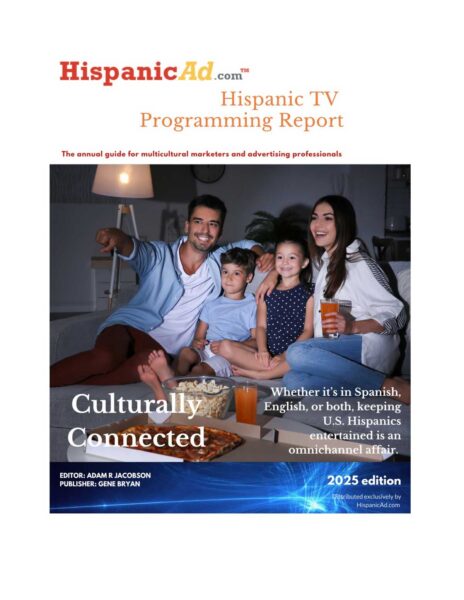
 In recent years, television measurement has been done through two distinct approaches. The first, adopted by more traditional television marketers, relies on gross rating points (GRPs) to evaluate and buy inventory to meet marketing goals. The second, brought on by the evolution of streaming behavior, evaluates based on the standard for digital audience measurement: impressions.
Research
Are Impressions the Answer to Fragmented TV Measurement?
Accelerating Brand Growth Using Psychological Resonance [REPORT]
 Brand growth is the mantra of marketers. Today the number of new tools available to help marketers achieve brand growth is multiplying annually. The new focus is on large scale databases, data science, artificial intelligence, biometrics, and the beginnings of a true marketing science. However, all of this is competing for attention within the context of established marketing processes, advertiser-agency relationship structures, and higher order degrees of complexity of communication. The result is that “good enough” often substitutes for adoption of proven innovations.
The Nielsen Total Audience Report: August 2020 [REPORT]
 Earlier this year, the pandemic thrust many Americans into a new lifestyle. We worked, learned, parented and cooked at home, shifting how and where we ate, watched TV and listened to music. It even altered our sleeping habits. But a funny thing happened on the road to re-emergence: Consumers, used to choosing when, where and how much content they connect with, found that by working from home they actually had a newfound choice when it came to their jobs, thereby giving employees a chance to achieve a better work/life balance.
Is Big Data Missing The Big Picture: The Hispanic Market
 The good thing about change is that it opens a dialogue about what needs to happen next. So I wonder, as data gets bigger, will it become more inclusive or has Hispanics and other minority populations, yet again, been left out of the conversation? by Mario Carrasco
Are Market Researchers Misrepresenting African Americans In the Online Sample Industry?
While the market research industry has mostly embraced the Black Lives Matter Movement, I urge fellow researchers to go beyond issuing a powerful statement.
Consumers Value Black, Hispanic Media Now More Than Ever, and Want Brands to Value it, Too
 Today’s charged sociopolitical climate has underscored the importance of multicultural media for Black and Hispanic audiences, a new study from Horowitz Research finds. Three-quarters of Black (74%) and Hispanic (73%) consumers are at least occasional consumers of Black or Hispanic targeted media and 44% and 42% are frequent consumers, according to Horowitz’s State of Consumer Engagement 2020 study. The study, which was fielded in May 2020, also found that six in 10 Asians are at least occasional consumers of media targeted to them.
About One-in-Four U.S. Hispanics Have Heard of Latinx, but Just 3% Use It [REPORT]
 Pan-ethnic labels describing the U.S. population of people tracing their roots to Latin America and Spain have been introduced over the decades, rising and falling in popularity. Today, the two dominant labels in use are Hispanic and Latino, with origins in the 1970s and 1990s respectively. More recently, a new, gender-neutral, pan-ethnic label, Latinx, has emerged as an alternative that is used by some news and entertainment outlets, corporations, local governments and universities to describe the nation’s Hispanic population.
Latinos Are Transforming Cultural Connections During COVID-19 [REPORT]
Nielsen’s latest Diverse Intelligence Series consumer report, Cultural Connectivity Transformed: How Latinos are connecting while social distancing, explores how the Latino community is connecting through the COVID-19 pandemic.
Four-in-ten who haven’t yet filled out U.S. census say they wouldn’t answer the door for a census worker
 As 2020 census workers begin knocking on the doors of millions of U.S. households that have not returned their census questionnaires, four-in-ten U.S. adults who have not yet responded say they would not be willing to answer their door, according to a new Pew Research Center survey.
The young and the restless: Generation Z in America
 s members of Generation Z (born 1996 to 2012) grow up and start to spend, consumer-packaged-goods (CPG) companies and retailers need to recognize that they are more than just a younger version of millennials (born 1980 to 1995). They are coming into adulthood with a distinct sensibility. That is one of the conclusions in our latest research report, The new age of the consumer.
Coronavirus Economic Downturn Has Hit Latinos Especially Hard [REPORT]
The coronavirus outbreak has significantly harmed the finances of U.S. Hispanics. As the nation’s economy contracted at a record rate in recent months, the group’s unemployment rate rose sharply, particularly among Hispanic women, and remains higher among Hispanic workers than U.S. workers overall.
A quick show of hands… are YOU a LatinX? Do you self-identify as a LatinX? Do you know many who do?
 The issue has bubbled up recently in both, Hispanic Agencies and clients and HispanicAd is only too happy to address it. The term “LatinX” is used as a self-identifier by only around 2% of the total U.S. Hispanic population. So, 98% of the Hispanic population self-identifies as Latino, Latina and/or Hispanic. So why is the term being used in advertising and marketing conversations as a term to categorize or represent all US Hispanics instead of “Hispanic” or “Latino”? By Marcelo Salup – Principal at CEO Analytics, LLC – Increasing customer retention & revenues through advanced statistics & algorithms
We need an honest discussion about using the term loosely …. ¿LatinX?
When we published our ThinkNow Latinx Report in November 2019, many were shocked by the stunning reality that 98% of Latinos do not identify with the term “Latinx” and prefer to identify as “Hispanic,” leaving only 2% of the burgeoning Hispanic consumer base preferring this ethnic label. Of that 2%, 100% speak English only.
Prior to COVID-19, Urban Core Counties in the U.S. Were Gaining Vitality on Key Measures [REPORT]
Following decades of rising population and affluence compared with the central cities, the luster of the nation’s large suburbs has diminished since 2000. Though the suburban population continues to increase at a relatively healthy clip, a range of indicators show that large suburban counties are lagging the gains of their urban core counterparts. Compared with 2000, suburban populations are now less engaged in the labor market, experiencing declining household incomes and seeing housing stock value that has not kept pace with that of the central cities.
Annual Auto Marketing Report: Drive Connections with Multicultural Consumers [REPORT]
Technology has transformed the way consumers shop for cars, and the novel coronavirus (COVID-19) pandemic is accelerating this pre-existing trend. Data has proven that many of the shifts in behavior we saw at the peak of the pandemic are here to stay and an enhanced online shopping experience will become the norm for many more industries.
How brand marketers have been led astray by their data
 As this blog nears the end of its existence I cannot help but reflect on the different themes that run through its 14 years of content – don’t worry, this is not another post about the importance of perceived difference to brand growth – however, it is a related subject: how often brand marketers get led astray by data. by Nigel Hollis
The State of Data 2020: Data Spending Growth and Coronavirus Crisis Impact [REPORT]
 The State of Data is a recurring research initiative designed to help U.S. advertising, marketing, and media practitioners better understand how their peers are investing in and using audience data as a fundamental pillar of their customer acquisition and engagement efforts.
Companies Face Brand Reckoning as COVID-19 Drives Shift in Brand Preferences for Nearly 1 in 2 Americans
 As Americans continue to cope with the uncertainty of health risks, economic downturn and restrictions in day-to-day living caused by COVID-19 and intensified by flashpoint events highlighting systemic racism in the United States, nearly half (45%) say their brand preferences have changed. Close to three quarters (74%) said the recent protests against racial injustice have made it more important to support businesses that improve diversity and inclusion, according to new research by global communications consultancy Ketchum.
4A’s Challenges Nielsen to Maintain Separate National In-Home and Out-of-Home TV Viewership
 The 4A’s announced that the organization is challenging Nielsen’s decision to combine national in-home and out-of-home television viewership into a single data stream*. This stream will be used in calculating ratings and inventory pricing at the start of the 2020-21 broadcast television season – and will also affect C3 and C7 ratings. This decision will negatively impact both agencies and marketers and their ability to distinguish data streams to support pricing, analysis and audience understanding.
COVID-19 and gender equality: Countering the regressive effects
What is good for gender equality is good for the economy and society as well. The COVID-19 pandemic puts that truth into stark relief and raises critically important choices.