DiMassimo Goldstein named AOR for the Bronx Zoo
 DiGo will be spearheading the iconic organization’s efforts to drive attendance and communicate its brand story.


DiGo will be spearheading the iconic organization’s efforts to drive attendance and communicate its brand story.
 reVolver Podcasts and Univision Communications Inc. (UCI) announced a strategic partnership to bring listeners and partners more exclusive Spanish-language audio content and expanded advertising opportunities.
 The African-American and Hispanic listening audience now accounts for one-third of the listening audience, and that number continues to grow.
 The report, Future Landscapes of the Orange Economy: Creative Pathways for Improving Lives in Latin America and the Caribbean, draws from the premise of five engines for global change and forecasts their impact on 10 zones of innovation in the creative and cultural industries, or the orange economy, as the IDB calls it.
 UNITED COLLECTIVE announced that it has hired Kristin Jackson as Chief Financial Officer and Chief Operating Officer.
 IRI announced initial findings from an ongoing study into the shopping attitudes and behaviors of Generation Z (aged 21 and under), providing manufacturers and retailers valuable insight into how to effectively communicate and activate with this new generation of consumers.
 The awards, sponsored by the PR Council in partnership with PRWeek, honor excellence in leadership and promoting diversity and inclusion within the communications sector.
 Project Unbound’s mission is to close the diversity gap in entertainment by raising awareness of the disparities and solutions; creating and celebrating content representative of today’s America; and developing and supporting emerging storytellers.
 By Gonzalo López Marti – Creative director, etc / LMMiami.com
 NBCUniversal Owned Television stations, a division of NBCUniversal, announced that Stacy Owen has been named President and General Manager of the Bay Area NBC and Telemundo-owned stations, KNTV and KSTS.
 Stingray Digital Group Inc., announced the appointment of Mariana Ferreira as Business Development Director, Latin America, reporting directly to Alejandra Olea, General Manager, Latin America of Stingray.
 Today, 36% of U.S. Hispanic adults are bilingual. This includes 25% who mainly use English and 38% who mainly use Spanish. Even among those who primarily speak English, over half consider themselves bilingual
 The research revealed social media plays a critical role in how this always-connected generation wishes to engage with companies around corporate social responsibility (CSR) initiatives. Eighty-two percent use social media to talk about issues they care about and a majority (87%) are likely to share their positive opinion of companies addressing social and environmental issues.
 The findings indicate a growing consumer preference to make purchasing decisions based on their social media activity, a reality that favors B2C companies.
 Today, the explosive growth of new digital content available via online video distribution networks such as YouTube competes directly with traditional broadcasting creating a new connected landscape with data at the center. With this shift in industry competition, media and entertainment companies aim to maximize content investment and return while providing a differentiated and exceptional customer experience.
 A new display opening Sept. 12 within the museum’s “American Enterprise” exhibition will explore advertising history through the lens of Tejano singer Selena Quintanilla-Perez (1971 – 1995). In the 1960s and 1970s, Latinos in advertising and Spanish-language broadcasting began advocating for the buying power of Latino consumers. This exhibition case looks at the transition the advertising industry made from mass market to targeting specific demographic groups.
 We Americans are obsessed with race. Turn on the news on any given day and you’re sure to be presented with the latest racial incident. Maybe a celebrity said something he or she should not have about race. Maybe the theme is the latest racial profiling incident. Regrettably, in 2016, it might be the latest African-American man shot by a police officer. By David Morse / New American Dimensions
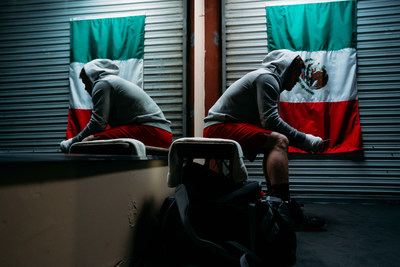 Hennessy and Golden Boy Promotions announced a formal partnership that brings to life the spirit of Hennessy’s “Never stop. Never settle.” mantra, with content that tells the remarkable story of Saul “Canelo” Álvarez.
 This year, US TV ad investment will expand just 0.5% to $71.65 billion, a figure down from the $72.72 billion predicted in our Q1 forecast for 2017. As a result, TV’s share of total media ad spending in the US will drop to 34.9%, and is expected to fall below 30% by 2021.
 On the heels of startling news of declining in-store sales earlier this year by popular brands and an overall sluggish retail environment, new research reveals that the current situation may not be as dire as it seems.