Future of Soccer in the US
 The no argument = the U.S. won’t anytime embrace soccer to the depth of other countries. by Stephen Palacios / Added Value


The no argument = the U.S. won’t anytime embrace soccer to the depth of other countries. by Stephen Palacios / Added Value
 Change is the dominant fact of life in every business today. And the ability to master and exploit change has become one of the most sought-after management skills. This is particularly true in marketing, where the very tempo of change is constantly quickening.
 We at Univision found this question of language of particular importance for our partners, and joined Nielsen and Starcom Mediavest Group’s Multicultural division to find some concrete answers. By Roberto Ruiz / Univision Communications Inc.
 Today’s kindergartners offer a glimpse of tomorrow’s demographics. A new data analysis by Pew Research Center finds a big increase over the past decade in the number of states where at least one-in-five public school kindergartners are Latino.
 Some rules in soccer, as in other sports, are based on absolutes: if the ball crosses the touchline it’s out of bounds. The offside rule is different; it’s based on the relative position of players from both teams. Culture has the same effect on language; it makes the meaning of words relative. There is no better example of this than an event that captures the attention of all Hispanics from different places: the World Cup.
 The percentage of young first-time mothers who are married is dropping, according to Fertility of Women in the United States: 2012, a report released by the U.S. Census Bureau.
 Quench your thirst. Brush your teeth. Bring the family together. At their most basic level, consumer products companies satisfy fundamental human needs. Today, digital technology is enabling those needs to be fulfilled better and faster than ever before.
 The increasing influence of Hispanic-Americans on every aspect of American life—from politics to media, fashion to entertainment—is felt most keenly in the four U.S. states bordering Mexico, a microcosm of the U.S. Hispanic community. Already the largest racial/ethnic group in the U.S. after Caucasian, Hispanics are forecast to become the majority in 25 years.
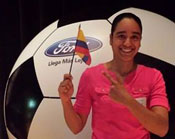 Social Media Day is an international celebration popularized by Mashable, the world’s leading social media publication. MCG Latino, on behalf of Ford Motor Company, socialized with 500 top influencers, speakers and enthusiasts from South Florida during Miami’s Social Media Day.
 Social channels will come and go. Why are we still surprised by this? Just last week, Catharine Taylor talked about the ennui that’s threatening to silence Twitter. Frankly, the only thing surprising about this is that Twitter has had that long a run. Let’s face it. If every there was a social media one-trick pony, it’s Twitter.
 This fully integrated marketing effort, crafted specifically for the World Cup, included TV, digital and social elements, all utilizing the #MeAgarroElGol hashtag. The intent of the campaign was to capture the excitement and thrill of celebrating a goal during the World Cup. Anytime. Anywhere.
 Clearly, the Internet presents a strong opportunity to convey ad messages to Hispanics. More importantly, brands using social media to create conversational forums for Hispanic consumers to converse with the brand – and like-minded consumers – are the ones really connecting with this important group.
 Are you still looking to hire a digital marketing specialist? If so, put on your Members Only jacket, pick up your Newton, and get back in your Model T Ford and drive home — because you are sorely out of date.
 Advertisers worldwide will spend $545.40 billion on paid media in 2014, according to new figures from eMarketer. Total media ad spending will increase 5.7%, eMarketer projects, more than doubling its growth rate of 2.6% from a year ago.
 As part of our ongoing series with Geoscape, this month’s MarketPulse is focused on New Mainstream vacation preferences. As we dive into the dog days of Summer, many of us are traveling to the beach, the mountains or just embarking on “staycations” to relax in the warm weather. The travel and tourism industry is incredibly lucrative and marketers must understand New Mainstream behaviors in order to capitalize on opportunity. Check out some of the surprising data below to learn how America is spending their time off.
 Clear Channel Media and Entertainment announced today that U.S. Hispanic advertising expert, Liz Sarachek Blacker, will join the company as Executive Vice of Hispanic Strategy and Sales, effective August 4, 2014.
 If you’ve had sporadic communication with some of your South Florida-based peers and clients since June 12, you’re likely not alone. By Adam R Jacobson
 With more people saying they’re willing to pay more for products and services from socially responsible companies, how can companies communicate that they’re on the same page? The most direct option may be how you’ve been communicating with them for years—at the point of sale. Making your social commitment clearly visible on your product packaging is not only a good way to tout your product’s benefits, but it can also be the difference between a purchase and a pass for many consumers.
 Consumers are spending more time on their apps than ever before. Over the past half-decade, the proliferation of mobile devices has transformed us into an app-driven society, presenting marketers with new opportunities to connect with consumers by creating more interesting and sophisticated apps to command their attention.
 Terra announced new additions to its U.S. operations team. Emilia Peña has been appointed Director of Sales while Luciano Islas joins as Senior Programmatic Sales Manager in the U.S. Liz Sarachek Blacker, who has served as Chief Revenue Officer for Terra for more than three years building a strong sales team, will move on to pursue a new opportunity.